ICCD — ActNow
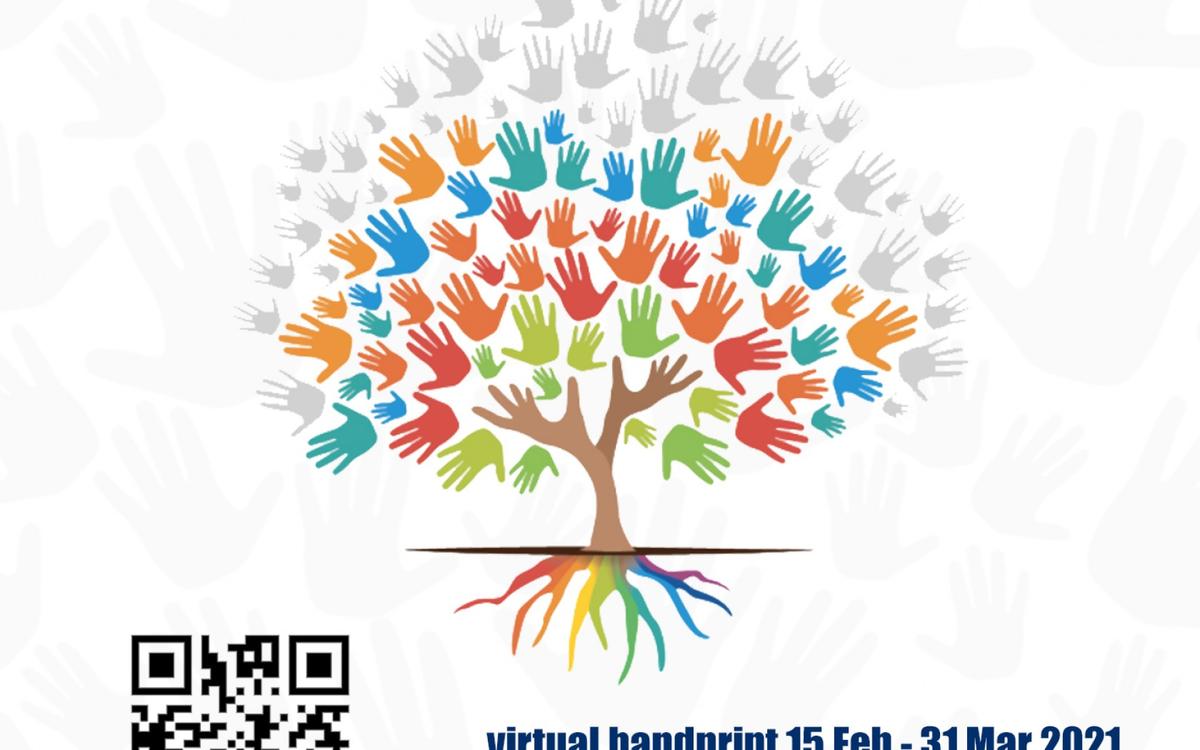
This year the focus is on honouring children and young people with cancer for their courage and resilience. CCI’s new initiative, the “Tree of Life”, symbolises the traces that children’s lives leave in the world and how they shape our shared future.
Take part by 31 March 2021 at iccd.care and leave your message and imprint, dedicated to a little hero of your choice.
Do you need a reason to take part?
Because children are our future and deserve the chance to live their lives to the full
Healthy children and adolescents contribute to productive and sustainable communities and to progressive societies.
Every child lost is an irreplaceable part of the future. We lose the gifts of their unique personalities, their talents and their potential contribution to our families and communities.
“For every child who dies of cancer, the world loses 71 years of life.”
One parent describes this situation very movingly:
“Childhood cancer is a thief. It steals our past, our present and our future. It steals our past because it taints the memories we have of our children — leaving us with ‘if we had known’ or ‘if only’. It steals our present because the illness and its treatment take up so much time, energy and emotion. It steals our future because even when our children recover, we are never the same again; we live forever facing the real possibility that it will come back. When they do not survive, we too are forever changed and robbed of the future we could have had with them.”
Even for the children who are cured, the battle rarely ends. More than 60% of survivors have chronic conditions as a result of the treatment they received; more than 25% have a severe or life-threatening condition. A recent study by a leading institution in the USA revealed that by the time survivors are 45, because of the treatment they had as children, more than 95% of them will have a chronic health problem, while 80% will have severe or life-threatening conditions.
In addition to the risks to physical health, another study shows that many survivors experience anxiety: 16% of them meet the criteria for post-traumatic stress disorder. Anxiety and depression can have a strong impact on health, even in those in excellent physical health.
Because no family should go bankrupt, lose its assets, become impoverished and fall into financial collapse when their child falls ill. Because no child and no family should be left alone in the fight
No family should ever have to choose between putting food on the table, sending a child to school or seeking treatment for a child with cancer. Sadly, because of the catastrophic costs of treatment and medicines, these are the hard choices that children’s families often have to make in middle- and low-income countries. In developed countries, the families of children with cancer who are underinsured or have no insurance face the same burden too.
As one parent said:
“Childhood cancer is NOT something given to children because they are strong enough to cope with it. Childhood cancer is NOT just happy children with cute shiny bald heads and brave smiles. It is frightening. It is dark. It steals children’s childhood; our joy and the peace in our families. It can destroy families and lives. It marks us for life. It is perhaps one of the most stressful, heartbreaking things in the world.”
Because access to better treatment, free quality medicines and health coverage can stop the deaths
Carefully implemented childhood cancer treatment programmes in middle- and low-income countries have documented an improvement in cure rates of 30% in less than a decade. Studies show that simple interventions such as educating parents or organising parent groups are cost-effective, but very effective strategies that can bring a significant return on investment by reducing abandonment and/or raising the cost-effectiveness thresholds of treatment.
Another effective strategy is that of “experience-exchange programmes”. Sustainable partnerships with centres of excellence in developed countries, or in other middle-income countries with advanced capacity, together with modest funding, mentoring, training and support for key staff, effectively complement top-down efforts to improve national health coverage and national efforts to fight childhood cancer.
Contrary to the belief that treating cancer in childhood is not cost-effective, recent studies in Africa and Central America reveal that investing in curing treatable and common cancers such as acute lymphoblastic leukaemia and Burkitt lymphoma is extremely cost-effective, even in LMICs. This shows that treating cancer in childhood can become cost-effective by using affordable medicines.
“Research in the USA has shown that, without making a single new discovery, 30% more teenagers with cancer could be cured simply by giving them paediatric protocols instead of adult ones.”
Because access to the best treatment for all children is their human right, not a privilege
30 years ago the UN issued a call for health for all. Yet childhood cancer continues to be a neglected and marginalised disease.
A child with cancer is no less (nor more) important than a child with malaria, measles, tuberculosis, HIV, malnutrition or other life-threatening diseases that disproportionately affect children in middle- and low-income countries. All sick children deserve our joint efforts to prolong their lives and improve their quality of life.
Children with cancer should suffer less and recover more. Working together, parent organisations, professional societies, governments, institutions dedicated to global development, academic institutions and people of goodwill can make a difference for children who would otherwise have no hope of a future.
One parent puts the challenge this way:
“The future of our children should not rest solely on the shoulders of families and friends who have lost their beloved children, nor on the kindness of strangers who feel their pain. We need our leaders to be accountable, to take bold and decisive steps to meet the needs of children with cancer, survivors and their families. They must realise that the future of our nation depends on their willingness to invest in the health and well-being of our children NOW, before it is too late.”
No more pain!
80% of the children in the world who will die will experience pain…
Children’s pain has no borders, but painkillers do!
98% of the children who need palliative care live in middle- and low-income countries.
NO MORE BORDERS!
No More Pain — ACCOWatch on YouTubeAnd if that is not enough, here is a little more
Because statistics do not tell the whole story
This may be due to the lack of registries in low- and middle-income countries, misdiagnosis and/or lack of registration. In these countries, children die undiagnosed, unreported and unrecorded.
“Experts and research estimate that approximately 90% of children with cancer live in these countries.”
Because childhood cancer knows no borders
As is already the case in high-income countries, in a growing number of middle-income countries childhood cancer is the leading cause of death among children and adolescents. While child mortality from infectious diseases has fallen significantly worldwide, mortality from childhood cancer is increasing. A large and growing share of child mortality in both developed and developing countries is due to non-communicable diseases, especially childhood cancer. Most public health experts consider this rate of increase a cause for concern.
Because childhood cancer is largely curable, but there are significant differences in the quality of treatment between countries and within each continent
Childhood cancer is considered a modern “miracle” of medicine. More than 70% of childhood cancer is now treatable with modern therapy. Overall, this is an impressive increase since the mid-1970s, when achieving 5-year remission was around 6%. Yet survival rates vary depending on the type of cancer and on factors such as the state of a country’s health-system infrastructure, its medical culture and socio-economic conditions. In middle- and low-income countries, where access to healthcare is limited and very difficult, the survival rate is only 10–20%, which means that only 1–2 out of 10 children who are diagnosed with cancer and treated will survive. Conversely, in developed countries the survival rate can reach 80–90%, which means that only one or two children diagnosed and treated for cancer will die.
The reasons for this significant inequality are: lack of information about the early signs and symptoms, late diagnosis, misdiagnosis, absent or weak referral systems, difficult access to care and treatment, catastrophic costs of treatment and medicines, weak health systems and abandonment (i.e. stopping treatment).
“Research has revealed that abandonment of treatment may account for one third of the difference in survival between developed countries and middle- and low-income countries. Abandonment of treatment is disproportionately higher in the latter.”
In some cases the difference in survival is over 50%, even among children/adolescents with cancer in neighbouring countries on the same continent. In Europe, for example, the countries of Central and Eastern Europe have significantly lower survival rates (i.e. higher mortality) than the EU-15. Lack of awareness among the population, the lack of prevention and screening efforts and limited health resources are seen as factors contributing to this gap.
Because one death is already one too many
Too many children and adolescents still die of cancer worldwide. Based on the current limited statistics, one child dies of cancer every three minutes. Effective treatments for some types of cancer still do not exist in many middle- and low-income countries, and even in some developed countries.
“While cancer in children is only a part of the global burden of all cancers, for children and their families it is the difference between life and death.”
Moreover, although significant progress has been made in developing medicines and treatments for adults, the development of medicines and treatments for cancer in childhood is clearly lagging behind. Children/adolescents with cancer continue to suffer from harsh and toxic therapies that cause health problems and challenges throughout their lives.