Inequalities in childhood cancer treatment
The substantial inequalities in access to the best possible care, specialists and innovative research for children and young people with cancer remain a critical issue across Europe. These inequalities contribute to a 20% difference in long-term remission rates when Western Europe is compared with Central and Eastern Europe. There is a fundamental need for clinics to reach a specific standard level of expertise and to keep their knowledge of “best practice” constantly up to date.
Europe must recognise that childhood cancer continues to be an urgent health and socio-economic issue. More than 35,000 children and young people are diagnosed in Europe every year, and despite the rise in cure rates over recent decades, cancer remains the leading cause of death in children over 1 year of age in Europe. It is also a major cause of morbidity and socio-economic costs: half of the half a million survivors suffer from late side effects that harm their health and well-being.
The European Society for Paediatric Oncology (SIOP Europe) has a well-defined European policy agenda for childhood cancer, which has gathered substantial support in successive manifestos for the European elections. Equal access to the best possible care and research for all patients in Europe is a fundamental pillar of this agenda. Our community has already launched important initiatives to reduce the stark inequalities in research, treatment and care for children with cancer. One example is the work of the European Reference Network on Paediatric Cancer (ERN PaedCan), supported by the EU Health Programme, which aims to reduce the gap in long-term remission rates by providing high-quality, accessible and cost-effective cross-border healthcare to children and young people in Europe, wherever they live. Furthermore, SIOP Europe has contributed to the EU-funded health programme Joint Action on Rare Cancers (JARC). JARC deals with the lack of systematic inclusion of rare cancers, including childhood malignancies, in national cancer strategies across Europe, and with ensuring the appropriate implementation and sustainability of ERNs.
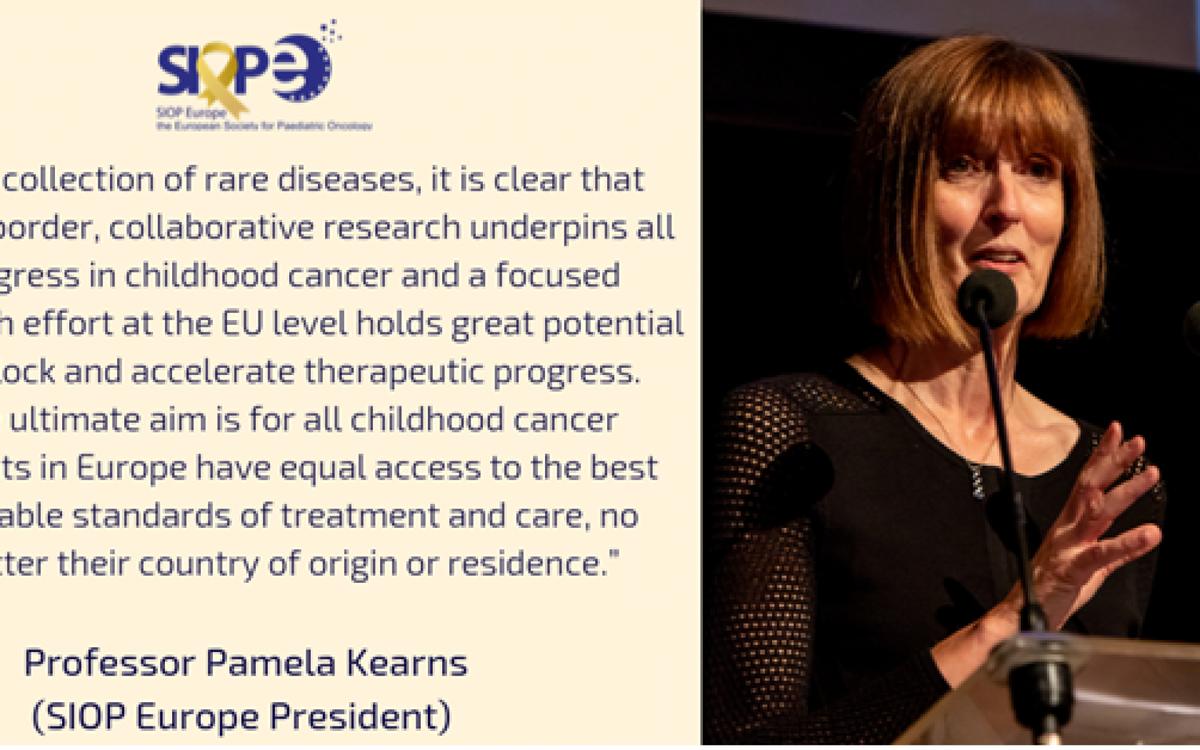
There is now cause for optimism about future childhood cancer research in Europe, with the announcement of the mission of the EU Framework Programme “Horizon Europe” dedicated to cancer. The incoming President of the European Commission, Ursula von der Leyen, recently drew attention to the measures related to the European plan to fight cancer, and dedicated members of the newly constituted European Parliament are ready for further engagement in the fight against the disease. As childhood cancer is one of the rare diseases, it is clear that cross-border collaborative research underpins all progress in its treatment, and focused research efforts at EU level have great potential to unlock and accelerate therapeutic progress. SIOP Europe looks forward to working in partnership with stakeholders to ensure that the urgent measures for patients — namely, equal access to the best treatment, care and innovative research — are at the forefront of this dynamic process. The main aim is for all children and young people with cancer to have equal access to treatment and care, regardless of the country they live in and of their origin.
Professor Pamela Kearns (SIOPE President) editorial in Cancer World Magazine (Autumn 2019 edition).